
The Unstoppable Journey - Michael Jordan's Success Story
- 12 Sep 2026
- 16 Oct 2026
- 5 Views
Michael Jordan: The Journey, Mindset, and Lessons From a Basketball Legend
Michael Jordan is widely regarded as one of the most influential basketball players in history. His career was built on extraordinary athletic ability, intense preparation, competitiveness, and a willingness to learn from difficult moments. However, his journey to becoming a global sports icon was not simply a story of natural talent.
From an early disappointment in high school to championship success in the NBA, Jordan's career illustrates how persistence and a strong commitment to improvement can shape long-term achievement. His influence eventually extended beyond basketball through the global popularity of the Jordan Brand, business ventures, philanthropy, and his broader cultural impact.
"To learn to succeed, you must first learn to fail"
Early Life and the Beginning of His Basketball Journey
Michael Jeffrey Jordan was born on February 17, 1963, in Brooklyn, New York. His family later moved to Wilmington, North Carolina, where he grew up and developed a strong interest in sports.
As a teenager, Jordan experienced a setback that became an important part of the story surrounding his early development. He did not make his high school's varsity basketball team as a sophomore. However, the commonly repeated version that he was simply "too short" or completely rejected from basketball is misleading. Jordan continued playing and developing his skills, and his growth and improvement eventually helped him become a highly regarded high school player.
Rather than allowing an early disappointment to define him, Jordan used it as motivation to work harder. His experience is a useful reminder that an unsuccessful attempt does not necessarily determine what someone can accomplish later.
College Success at North Carolina
Jordan played college basketball at the University of North Carolina under legendary coach Dean Smith. During his freshman season in 1982, he made one of the most memorable shots in college basketball history.
In the NCAA championship game against Georgetown, Jordan hit a late jump shot that gave North Carolina the lead and ultimately secured the championship. The moment helped establish his reputation as a player capable of performing under pressure.
Jordan continued to develop during his college career and was named the Naismith and Wooden College Player of the Year in 1984. His combination of athleticism, scoring ability, defense, and competitiveness made him one of the most highly regarded prospects entering the NBA.
Entering the NBA
In 1984, the Chicago Bulls selected Jordan with the third overall pick in the NBA Draft. He quickly made an impact, winning the NBA Rookie of the Year Award after his first season.
Jordan's explosive athleticism, creativity around the basket, scoring ability, and defensive skills quickly made him one of the league's most exciting players. He became a central figure in the growth of the NBA's popularity during the 1980s and 1990s.
His success, however, did not come immediately. The Bulls had to develop into a championship-level team, and Jordan faced strong competition from other elite players and teams before winning his first NBA championship.
Learning From Competition and Setbacks
Jordan's career included many challenges. Early in his NBA career, the Bulls repeatedly struggled against stronger teams in the playoffs. Jordan also dealt with injuries, intense media attention, and the pressure that came with becoming one of the league's biggest stars.
Instead of treating setbacks as reasons to lower his standards, Jordan became known for using difficult experiences as motivation. His approach reflected a strong competitive mindset: identify weaknesses, work on them, and return better prepared.
This does not mean that failure automatically leads to success. Improvement requires reflection, practice, support, and the ability to make meaningful changes after something goes wrong.
The Chicago Bulls Dynasty
Jordan eventually helped lead the Chicago Bulls to six NBA championships, winning three consecutive titles from 1991 to 1993 and another three consecutive championships from 1996 to 1998.
He was named NBA Finals MVP in all six championship seasons. Jordan also won five regular-season NBA Most Valuable Player awards and was selected to the NBA All-Star team 14 times.
His career achievements were not limited to scoring. Jordan was also recognized for his defensive ability, earning nine NBA All-Defensive First Team selections and winning the NBA Defensive Player of the Year Award in 1988.
A Career Interrupted by Change
Jordan's professional career included significant changes away from basketball as well. In 1993, following the death of his father, Jordan announced his first retirement from the NBA. He subsequently pursued professional baseball and played in the Chicago White Sox organization and its minor-league system.
Jordan returned to the Bulls in 1995 and resumed his basketball career. His return eventually led to another three NBA championships, adding to the remarkable second half of his career.
After another retirement in 1999, Jordan later returned to the NBA as a player with the Washington Wizards, where he played from 2001 to 2003 before retiring for the final time as a player.
More Than a Basketball Player
Jordan's influence reached far beyond the basketball court. His popularity helped transform the business of sports endorsements and contributed significantly to the global visibility of basketball culture.
The Air Jordan line, launched in partnership with Nike, became one of the most recognizable names in athletic footwear and apparel. The brand's influence extended beyond professional athletes and became an important part of popular culture and sneaker culture.
Jordan also appeared in the 1996 film Space Jam, further strengthening his presence in popular culture and introducing him to audiences beyond traditional basketball fans.
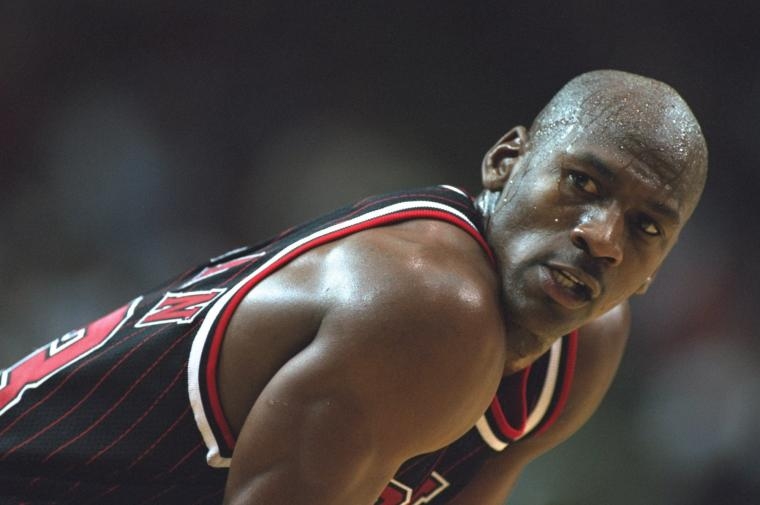
Philanthropy and Community Support
Jordan has also contributed to charitable and community initiatives throughout his career. His philanthropic efforts have included support for healthcare, education, social justice initiatives, and organizations working with underserved communities.
His charitable work has taken different forms over the years, including financial donations and support for organizations and community projects. His philanthropic activities are one part of a broader legacy that extends beyond his achievements as an athlete.
The Mindset Behind His Success
Jordan's career is often discussed in terms of talent, but talent alone does not explain the consistency of his performance. His reputation was also built around preparation, competitiveness, discipline, and an intense desire to improve.
One of the most useful lessons from his career is that setbacks can provide information. Losing an important game, struggling against a particular opponent, or receiving criticism can reveal areas that need improvement. The valuable response is not simply to become frustrated, but to identify what can be learned from the experience.
Lessons We Can Learn From Michael Jordan
1. Do Not Let an Early Setback Define You
An early disappointment does not have to become a permanent limitation. Jordan's high school experience shows the importance of continuing to develop rather than assuming that one rejection determines your future.
2. Talent Needs Consistent Work
Natural ability can provide an advantage, but sustained performance requires practice and preparation. Jordan's career demonstrates the importance of continuing to refine skills even after reaching a high level.
3. Use Failure as Feedback
Failure is not automatically a path to success, but it can provide valuable information. Understanding why something went wrong can help you make better decisions the next time.
4. Prepare for High-Pressure Situations
Jordan became known for performing in important moments, but confidence in pressure situations is often supported by preparation. The more thoroughly you prepare, the more capable you may feel when the stakes become higher.
5. Keep Improving Even After Success
Reaching an important goal does not mean that development should stop. Jordan continued to work on different aspects of his game throughout his career, even after becoming one of the league's leading players.
6. Develop More Than One Dimension of Your Career
Jordan's influence eventually extended into business, branding, entertainment, and philanthropy. His career illustrates how an individual's professional identity can evolve beyond their original field.
7. Stay Committed to Meaningful Goals
Ambition becomes more useful when it is connected to specific goals and consistent effort. Jordan's career shows the value of setting demanding objectives while remaining willing to work toward them over time.
"I Can Accept Failure, Everyone Fails at Something. But I Can't Accept Not Trying."
This quote is widely associated with Michael Jordan and reflects a recurring theme in how his career is discussed: the importance of making a genuine effort even when success is uncertain.
The deeper lesson is not that trying guarantees success. It is that avoiding every difficult challenge because failure is possible can prevent growth. A willingness to attempt difficult goals, learn from the outcome, and try again can be valuable in sports, business, education, and everyday life.
Michael Jordan's Lasting Legacy
Michael Jordan's legacy is built on much more than six NBA championships. His career helped shape the global image of professional basketball, influenced sports marketing, and turned the Jordan name into a major cultural and commercial brand.
At the same time, his achievements were supported by teammates, coaches, trainers, executives, family members, and countless other professionals. Great individual performances rarely happen in isolation.
Final Thoughts
Michael Jordan's journey from a young player facing an early setback to one of basketball's most recognizable figures demonstrates the importance of persistence, preparation, adaptability, and self-belief.
His story does not suggest that hard work alone guarantees extraordinary success. Circumstances, opportunities, talent, coaching, teamwork, and many other factors also matter. What his career does show is the value of responding constructively to setbacks and continuing to improve when the path becomes difficult.
Whether you are an athlete, entrepreneur, student, or professional, one lesson from Jordan's journey remains relevant: setbacks do not have to be the final chapter. They can become opportunities to reassess, improve, and move forward with greater preparation and purpose.